Choose a coin-return lock when the coin acts as a temporary deposit and should go back to the user at the end of a correct cycle. Choose a coin-retain lock when the coin is a payment and must drop into a controlled collection box. For commercial buyers, this decision affects the mechanism, user instructions, servicing, cash control and total operating cost.
Coin Retain vs Coin Return Locks at a Glance
| Decision point | Coin-return system | Coin-retain system |
| Purpose of coin | Refundable deposit | Fee or charge |
| End of normal cycle | Coin returns to user | Coin enters collection compartment |
| Typical applications | Shopping carts, session lockers, shared keys and trolleys | Paid lockers, public toilets and rental equipment |
| Operator workload | Low cash collection requirement | Requires collection, accounting and secure access |
| Main failure concern | Coin does not return or mechanism does not reset | Coin jams before collection or collection box becomes full |
| Key design question | What action releases the coin? | How is retained money stored and removed? |
How a Coin-Return Lock Works
The user inserts the accepted coin or token, then receives a key, releases a chain or enables the locking cycle. When the locker is reopened or the trolley is connected to its return point, the mechanism releases the same deposit.
This flow encourages users to return equipment or end a locker session without turning the lock into a payment device. It is useful where the operator wants orderly behavior but does not want to collect cash.
A buyer should define what insertion releases, when the key can be removed, which action returns the deposit and how the mechanism resets. Otherwise, two suppliers can quote mechanically different products under the same “coin-return lock” description.
How a Coin-Retain Lock Works
A coin-retain system accepts the specified coin or token and routes it into a protected compartment during or after operation. The user receives access, but the payment is not refunded. Staff later open the collection area with an authorized service key or another controlled method.
The collection system is part of the specification. State the expected transactions between service visits, usable box volume, access direction, anti-fishing requirements, removal method and accounting procedure. A mechanism that accepts coins reliably can still cause downtime if a full box blocks the coin path.
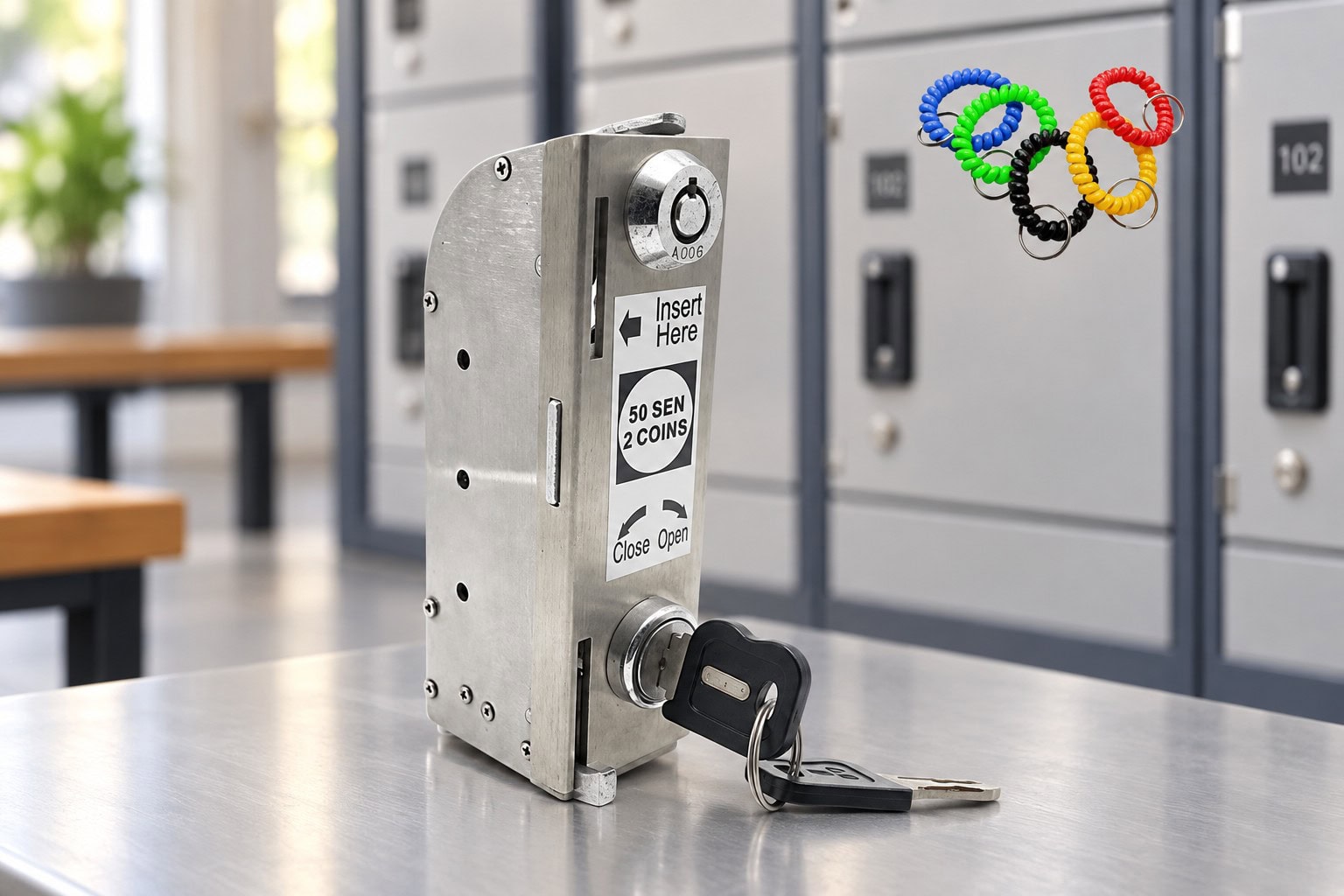
ANLI’s commercial coin-lock range includes products for locker, public-facility and equipment applications. Final configuration should be based on the required user flow rather than a catalogue photo alone.
Which System Fits Common Commercial Applications?
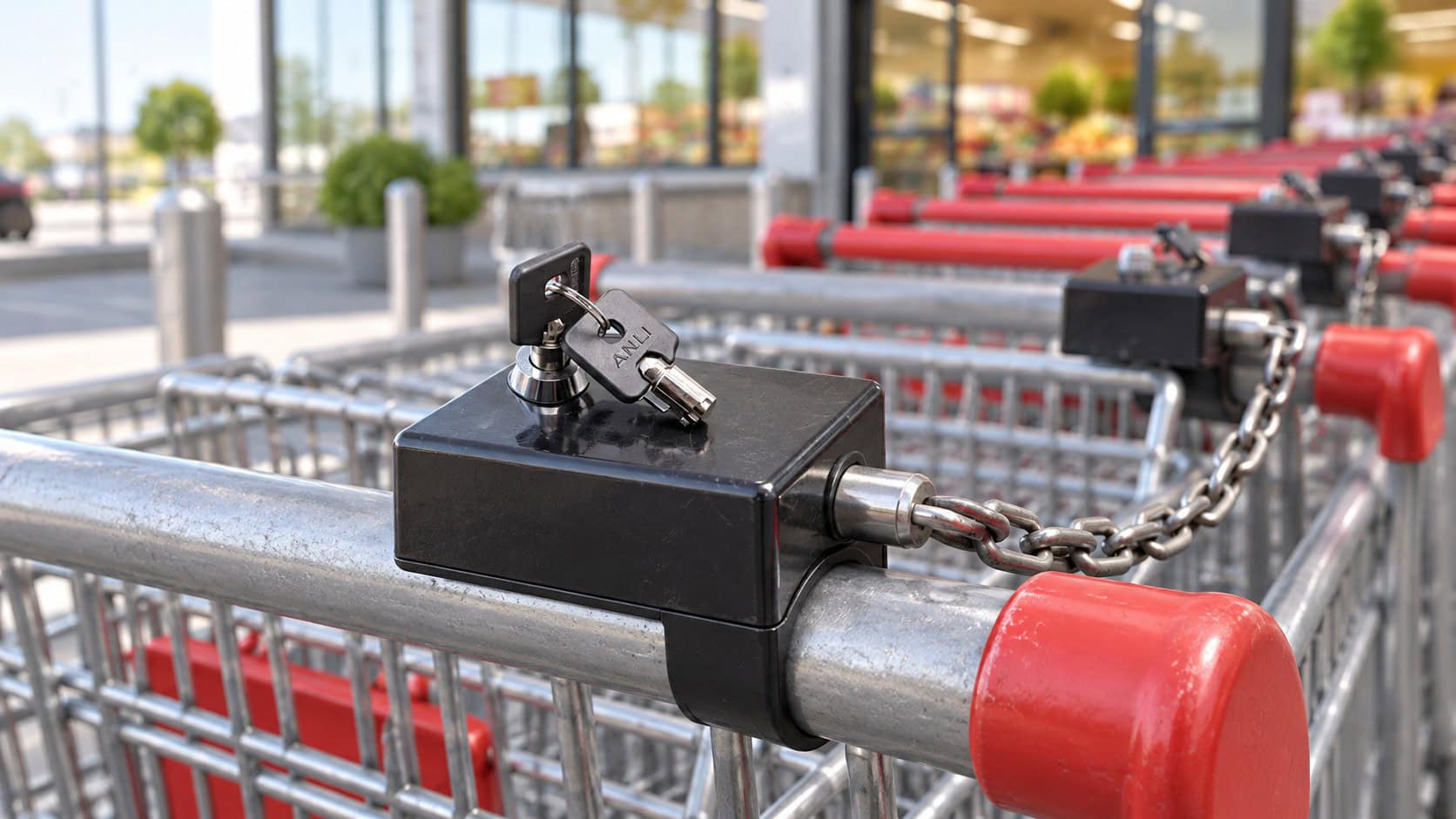
Lockers can use coin return to encourage key return or coin retain to collect a usage fee. Shopping carts normally use a return deposit; define chain length, plug geometry, handle-tube diameter and outdoor exposure. Public toilets and paid equipment generally use retention and need secure collection plus staff access. ANLI’s guide to coin locks for carts, lockers and trolleys explains why these interfaces are not interchangeable.
Coin or Token: Define the Accepted Input
A currency name is not a complete engineering specification. Provide physical samples and document diameter, thickness, mass where relevant, material or magnetic response, edge profile and acceptable wear. If a proprietary token is used, control its drawing, tooling and reorder consistency.
Also define what the mechanism should reject. Washers, similar foreign coins and damaged tokens can create false acceptance or jams. Validation should use approved new and worn samples plus agreed near-size rejects.
Keying, Override and Service Access
Coin operation and staff access are separate functions. Specify whether the project needs an individual user key, keyed-alike service access, a master-key hierarchy or a dedicated collection-box key. State who may release a trapped user, retrieve a lost key, empty money or reset a failed mechanism.
An external emergency override does not automatically satisfy emergency-egress or accessibility rules. Those requirements depend on the door, lockset, occupancy and local regulations. Review the complete installed system with the responsible building professional.
What to Test Before Mass Production
- The complete operating sequence with the final coin or token.
- Correct return or retention under the intended mounting angle.
- Wrong-object rejection and recovery from a partial insertion.
- Operation with the representative door, latch, chain or handle tube.
- Collection capacity and full-box behavior for retain systems.
- Cycle performance at the agreed load and usage frequency.
- Function after agreed moisture, corrosion or cleaning-chemical exposure.
- Staff override, coin-box access and reset procedures.
A Practical RFQ Template
Send suppliers the application, user-flow diagram, coin or token samples, mounting drawing, handedness, latch or chain interface, environment, expected daily cycles, key plan, service method, finish, logo, packaging and forecast quantity. State whether the system must return or retain the coin and describe the exact event that completes the cycle.
Specify the Right Coin-Lock Flow With ANLI
ANLI supports OEM and wholesale coin-lock projects with requirement review, mechanism configuration, sample fitting and production planning. Send your user flow, coin or token sample, installation drawing, key plan, environment and annual volume through the contact page for a feasibility review and sample proposal.
Frequently Asked Questions
Can the same lock be changed from coin return to coin retain?
Not necessarily. The return path, collection route and reset logic may use different parts. Confirm conversion feasibility before choosing a platform or tooling.
Is a token more reliable than a coin?
It can improve control when its dimensions and supply are consistent, but reliability still depends on mechanism tolerances, contamination, wear and installation.
Which system costs less to operate?
Coin return reduces cash-collection work. Coin retain can generate revenue but adds collection, accounting and service tasks. Compare the complete operating model, not only the lock price.