A master key opens multiple authorized coin locks through a planned cylinder hierarchy. Emergency access is broader: it is the approved method for opening a door, releasing a user, retrieving a key or coin, and resetting the mechanism when normal operation fails. Commercial buyers should define these roles separately so one key does not give unnecessary access to both user compartments and collected money.

The Four Access Functions to Separate
Coin locks can contain several access paths. The names vary by design, so specify the required function rather than relying on a label.
| Access role | Typical purpose | Control question |
| User key | Operates one locker or one session | Is the key captive, removable or attached to a wrist coil? |
| Master or supervisor key | Opens an authorized group of locks | Which doors, zones or sites should it open? |
| Service or reset key | Clears a fault or returns the mechanism to service | Can it also open the user’s compartment? |
| Collection-box key | Provides access to retained coins | Should cash access be separated from locker access? |
Some mechanisms combine roles; others use separate cylinders. Separation improves accountability but adds administration.
How a Master-Key Hierarchy Works
In a master-key system, each user or change key opens one lock or an assigned group. A master key opens several approved change-key combinations. Larger projects may add zone masters and a site-wide grand master, if the cylinder design supports that hierarchy.
The benefit is operational access without issuing a duplicate of every user key. Staff can inspect an abandoned locker, help a user or perform maintenance with controlled authority.
The trade-off is risk concentration. A lost high-level key affects every cylinder within its scope. Limit the hierarchy to genuine operational needs, keep issue records, restrict duplication and plan how compromised groups will be rekeyed or replaced.
ANLI’s coin-lock range covers different locker, door and equipment formats. Master-key feasibility and capacity depend on the selected cylinder and mechanism, so the key plan should be reviewed before samples are approved.
Emergency Access Is a Procedure, Not Just a Key
An emergency-access plan should answer three questions: what failure occurred, who is authorized to respond, and what condition must the lock be left in afterward?
Typical events include a lost key, trapped person or property, jammed coin, failed return, full collection box, abandoned locker or latch load that prevents key rotation.
For each event, document the opening method, identity check, coin or property handling, reset steps and incident record. Staff should know whether a master key merely unlocks the door or also resets the coin mechanism.
Do Not Confuse External Override With Emergency Egress
An external staff key may provide access into a compartment or room. Emergency egress concerns a person’s ability to leave and may be governed by building, fire or accessibility rules.
A master key, coin override or “emergency” product name does not by itself demonstrate compliance. The door, hardware set, occupancy and local requirements must be assessed as a complete installation by the responsible professional.
Key-Captive and Coin-Control Logic
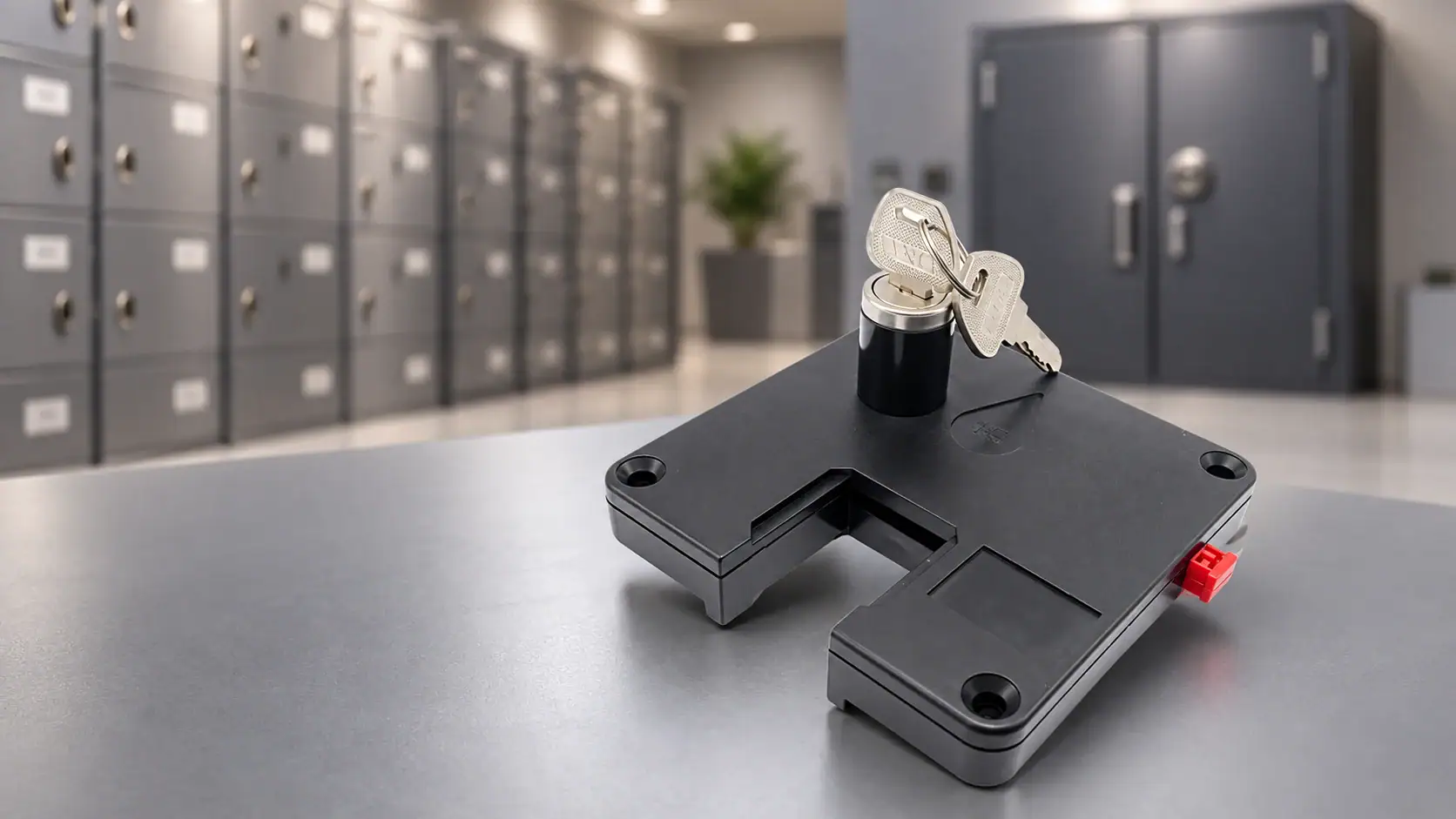
Many locker locks hold the user key in one state and release it in another. This can help prevent the key from being removed before the door is secured or the deposit is accepted. The exact sequence is mechanism-specific.
Define when the user key can be removed, how coin insertion affects key movement, whether reopening returns or retains the coin, what a master key does at each stage and whether override changes the reset state.
Test all normal and interrupted states. An override that opens the door but leaves the slider between positions can create the next service call.
Separate Cash Access From Compartment Access
For coin-retain systems, the collection compartment is a financial-control point. A locker supervisor may need to help users but should not automatically gain access to cash. Conversely, a cash-collection employee may not need access to every user compartment.
Where the product architecture permits, specify separate keyways or key groups. Record which roles can open the user door, mechanism cover and coin box. Packaging and installation schedules should identify keys clearly without exposing sensitive key codes unnecessarily.
Build the Key Schedule Before Ordering
Create a controlled schedule listing each lock ID, location, user-key code or group, master level, service access and collection access. Allow for future expansion without making every current key more powerful than necessary.
The purchase order should state key groups, quantities by key role, marking and packaging, reorder authorization, codes to match or exclude, and control of the key chart.
ANLI’s discussion of why coin locks jam can also help teams distinguish a true cylinder-access problem from coin-path or door-alignment faults.
Validate Every Access State
Use production-intent samples on a representative door. Test normal user operation, every authorized master level, service reset, collection access and wrong-key rejection. Include lost-key and interrupted-cycle scenarios.
Agree on cycle count, sample quantity, door load, coin or token samples, environmental conditioning and acceptance criteria. After testing, confirm that the door locks, the key can be removed only in the intended states, the coin or token follows the correct path, each authorized key performs only its assigned role, and the mechanism returns to service after an override.
Prepare an Access-Control RFQ
Provide the application, lock quantity, door and latch drawing, coin or token specification, normal operating sequence, required key hierarchy, staff roles, emergency scenarios, collection-access rules, environment, finish, marking, packaging and forecast repeat orders. The RFQ should also state who controls the key schedule and how replacement or expansion orders will be authorized.
Plan a Controlled Coin-Lock Access System
ANLI supports OEM and wholesale coin-lock projects with mechanism review, key-plan development, access-role separation, production-intent samples and repeat-order control. Send your door drawing, operating sequence, coin or token sample, required access roles, emergency procedure, environment and forecast volume through the contact page for a feasibility review and sample proposal.
Frequently Asked Questions
Can one master key reset every coin lock?
Not automatically. Opening the cylinder and resetting the coin mechanism may be separate functions. Confirm what the master key does in every operating state.
Should the master key also open the coin box?
Usually only when the operating policy requires it. Separating compartment access from cash access can improve accountability and limit the effect of a lost key.
What should be tested during an emergency override?
Test the representative failure condition, authorized opening method, coin or key recovery, mechanism reset, relocking and the next normal user cycle. Define the sample, door load and acceptance criteria before testing.