Shopping carts, lockers, and transport trolleys require different coin-lock mechanisms. Specify whether the coin is returned or retained, how the unit releases, mounting geometry, staff override, operating frequency, and wrong-object rejection.
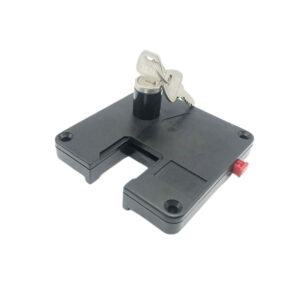
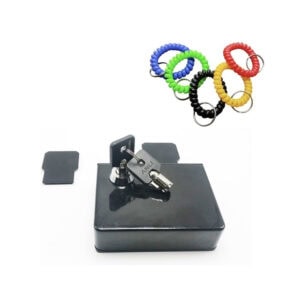
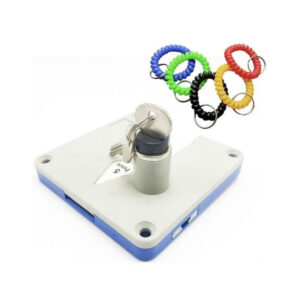
Coin-lock mechanisms are application-specific rather than one fixed catalog product. ANLI can review the coin or token, user flow, handle or door interface, chain or latch geometry, environmental exposure, and service method, then adapt an existing platform or develop the required housing and mechanical parts.
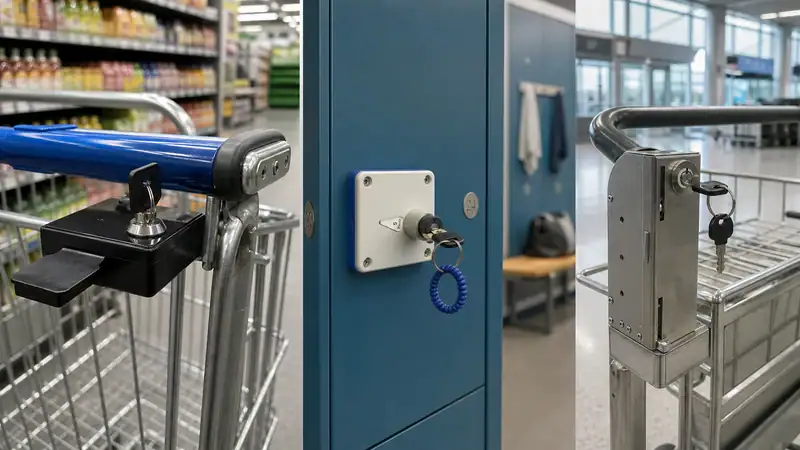
The Three Main User Flows
Shopping cart coin locks
A shopping cart lock normally encourages customers to return the cart. The user inserts a coin or token to release one cart from a chain. After returning the cart and reconnecting the chain, the coin is released.
This is a deposit-and-return system rather than a payment system. Fast, intuitive operation is essential because many users interact with the mechanism every day.
Locker coin locks
Locker systems can be coin-return or coin-retain.
In a coin-return locker, the user inserts a coin, locks the door, and receives the coin back when reopening. The deposit encourages proper use or ensures the locker remains associated with the key during the session.
In a coin-retain locker, the mechanism keeps the coin after use. The installation may use the coin as a rental fee or service charge. Staff then collect the retained coins through a controlled compartment.
Trolley coin locks
Commercial trolleys include airport luggage carts, hospital carts, warehouse carts, and utility trolleys. Their lock systems may resemble shopping cart locks, but operating conditions can be more demanding. Outdoor exposure, heavier equipment, different handle tubes, longer chains, and fleet-management requirements can change the design.
Define whether the trolley system controls returns, collects rental fees, deters theft, or organizes the fleet.
Key Application Differences
| Requirement | Shopping Cart | Locker | Commercial Trolley |
| Typical purpose | Encourage cart return | Control temporary storage or collect a fee | Encourage return, manage rental, or organize a fleet |
| Common coin action | Return coin after reconnection | Return or retain, depending on business model | Return or retain |
| Mounting | Handle tube or basket structure | Door panel with lock body and cam/latch | Handle tube, frame, or docking point |
| User credential | Coin/token plus chain coupling | Coin/token plus key, knob, or latch | Coin/token, chain, key, or docking device |
| Main durability concern | Very high daily cycles and impacts | Door alignment, moisture, key loss | Outdoor exposure, impacts, heavy handling |
| Staff access | Service key or opening tool | Master key and coin collection access | Service key and fleet override |
Coin Return vs Coin Retain
This choice should be made before discussing the lock body.
A coin-return mechanism temporarily holds the deposit. The system must reliably release the correct coin at the end of the cycle. It suits supermarkets, gyms, pools, and facilities that want users to return equipment or keys without charging them.
A coin-retain mechanism routes the coin into a collection box or secured compartment. It suits paid lockers and rental systems. Buyers must consider collection capacity, authorized access, accounting, and protection against unauthorized removal.
Coin and Token Compatibility
Currency varies by market, and coins that look similar may differ in diameter, thickness, weight, material, or edge profile. A mechanism designed around one coin may accept another coin or washer unintentionally.
For an international project, provide physical coin samples whenever possible. At minimum, specify:
- Diameter and tolerance.
- Thickness and tolerance.
- Material or magnetic response.
- Edge shape.
- Weight, if the mechanism uses it.
- Whether custom tokens must also work.
- Objects that must be rejected.
Custom tokens give operators control over dimensions and avoid problems caused by currency changes. They work well in private facilities and closed campuses, provided users can obtain them conveniently.
Mounting and Mechanical Layout
Shopping carts
The lock must fit the handle diameter and available straight length. The chain should reach the next cart without dragging or creating a snag hazard. Housing orientation matters for both right- and left-handed use.
The attachment must resist rotation and loosening under impact. Provide handle-tube dimensions, mounting method, chain length, nesting distance, and mating-plug geometry.
Lockers
Locker locks must match door thickness, material, opening direction, latch or cam geometry, and frame clearance. Metal, laminate, and plastic lockers may need different fasteners or reinforcement.
The coin mechanism must also remain accessible for maintenance without exposing the cash compartment. In wet areas, drainage, corrosion-resistant materials, and protection from cleaning chemicals deserve special attention.
Trolleys
Trolley frames vary widely. A luggage cart may use a large tubular handle and outdoor docking rail, while a hospital cart may need a compact, easy-clean mechanism. Vibration and repeated collision can loosen poorly chosen fasteners.
Send a drawing of the handle or mounting plate, not only a photograph. Include the nesting or docking distance and expected direction of chain pull.
Key Control and Staff Override
For lockers, decide whether each unit needs an individual user key, whether the key is captive while the locker is open, and whether a master key can open occupied units. Define how many master-key levels are required and who controls duplicates.
For shopping carts and trolleys, service keys or tools may be needed to release equipment, clear foreign objects, or replace parts. The override should support maintenance without making unauthorized release easy.
Keep a controlled key-code plan for multi-site projects. When ordering replacements, identify whether new locks must match existing master keys or remain in a separate series.
Durability and Environmental Requirements
Shopping cart and trolley locks experience impacts, vibration, rain, dust, and careless operation. Locker locks experience repeated turning, door misalignment, moisture, and sometimes aggressive cleaning.
Useful validation can include:
- Operating-cycle tests using real coins and tokens.
- Chain pull and coupling tests.
- Wrong-object and partial-insertion tests.
- Corrosion testing for exposed metal components.
- Low- and high-temperature operation.
- Drop, vibration, or impact checks appropriate to the equipment.
- Key, knob, latch, and return-force consistency.
The test plan should reproduce the application because bench performance may change when the housing is tilted, dirty, wet, or mounted on flexible equipment.
Preventing Jams and Service Problems
Coin jams often result from incompatible coins, debris, worn guides, forced insertion, or an incorrect mounting angle. Good designs provide controlled coin paths and service access.
Operators can reduce downtime by:
- Posting clear user instructions near the mechanism.
- Keeping approved coins or tokens consistent.
- Cleaning coin paths without using residue-forming lubricants.
- Inspecting chains, plugs, keys, and return springs.
- Replacing damaged housings before water and dirt enter.
- Maintaining spare service parts for large fleets.
Explore ANLI LOCK – China Professional Coin Lock Manufacturer
ANLI LOCK develops coin-lock solutions for OEM and wholesale projects, with support for requirement review, sample fitting, operating tests, component adjustment, branding, and production. Send the application drawing, coin or token details, key plan, installation environment, and required user flow through the contact page for a feasibility review.
OEM Customization Options
Coin-lock projects often require more than a logo. Possible variables include:
- Accepted coin or token dimensions.
- Coin-return or coin-retain operation.
- Housing color and material.
- Chain length, chain finish, and plug shape.
- Handle-tube mounting size.
- Locker cam, latch, and door thickness.
- Keyed-different, keyed-alike, or master-key system.
- Right-hand or left-hand orientation.
- Packaging by individual unit, site, or installation kit.
ANLI first checks whether a proven platform can meet the application, then identifies the parts that need modification. Custom work can cover the coin path, return/retain logic, housing, chain and plug, mounting interface, cam or latch, key plan, color, logo, instructions, and packaging. A new mechanism is considered when the coin, mounting, user flow, or security requirement cannot be met reliably by an existing design.