Token-operated locks are usually better for managed facilities that issue their own tokens, need controlled access or want to avoid dependence on a local coin denomination.
Coin-operated locks are usually better when users need immediate public access or the installation collects a familiar cash fee. Commercial buyers should base the decision on user flow, revenue model, token distribution, fraud risk and service logistics, not only the mechanism price.
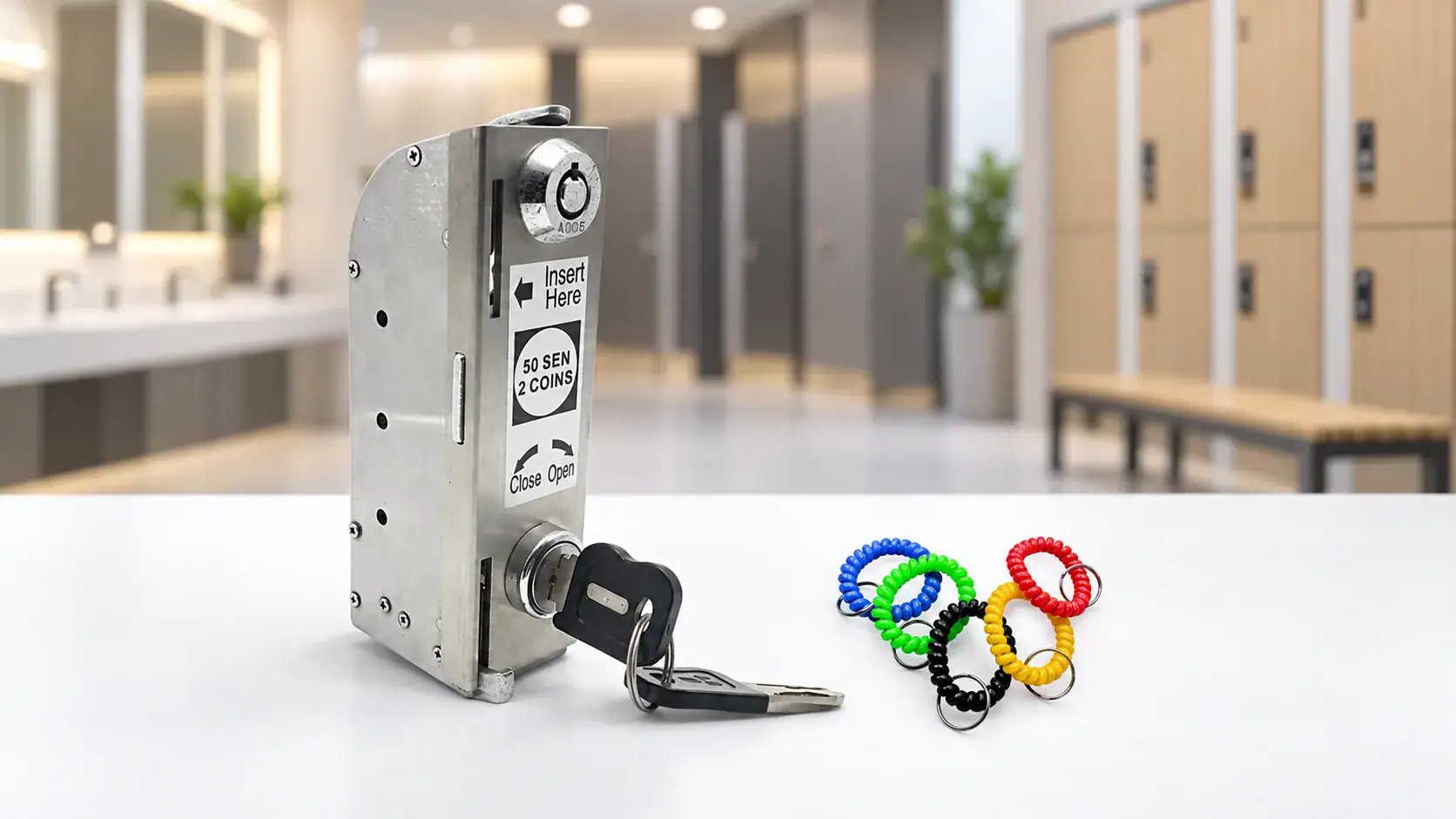
Token-Operated vs Coin-Operated Locks: Quick Comparison
| Commercial factor | Token-operated lock | Coin-operated lock |
| User obtains input | Issued, sold or borrowed on site | Uses accepted local currency |
| Best environment | Closed or managed facility | Public or high-turnover access |
| Revenue flexibility | Token price can differ from face value | Fee is tied to coin denomination or combination |
| Currency-change risk | Low after token design is controlled | Mechanism may need modification or replacement |
| Distribution work | Operator must stock and issue tokens | Less issuing work if users carry the coin |
| Branding opportunity | Custom shape, color or marking possible | Limited to instructions and lock branding |
| Main misuse risk | Unauthorized copies or inconsistent token batches | Similar coins, washers, foreign currency or damaged coins |
Either format can support return or retain operation. A token can be refunded as a deposit or kept as payment. A coin can also be returned or collected. Specify both the accepted object and the end-of-cycle behavior.
When a Token System Is the Better Choice
Tokens suit gyms, leisure centers, factories, schools, hospitals, staff facilities and rental operations where the operator already controls access. The facility can issue one token to each authorized user or sell tokens at reception.
Tokens can preserve one mechanism when local coinage changes, limit casual public use and separate deposit value from currency denomination.
The trade-off is logistics. Someone must purchase, store, issue, recover and reorder tokens. A lost or unavailable token can prevent a legitimate user from operating the lock. Large sites should define par stock, reorder lead time and control of token drawings or tooling.
When a Coin System Is the Better Choice
Coins suit public toilets, paid lockers, unattended services and other installations where immediate use matters. A visitor understands the transaction without needing to find a service desk or app.
A coin system can also reduce the operator’s token inventory. However, the mechanism is tied to the accepted currency. Similar coins or objects may be accepted unintentionally, and future coin changes may create a retrofit requirement.
ANLI’s coin-lock product range includes platforms for different commercial uses. Buyers should confirm the exact accepted coin, operating sequence and installation instead of assuming one model works with every currency.
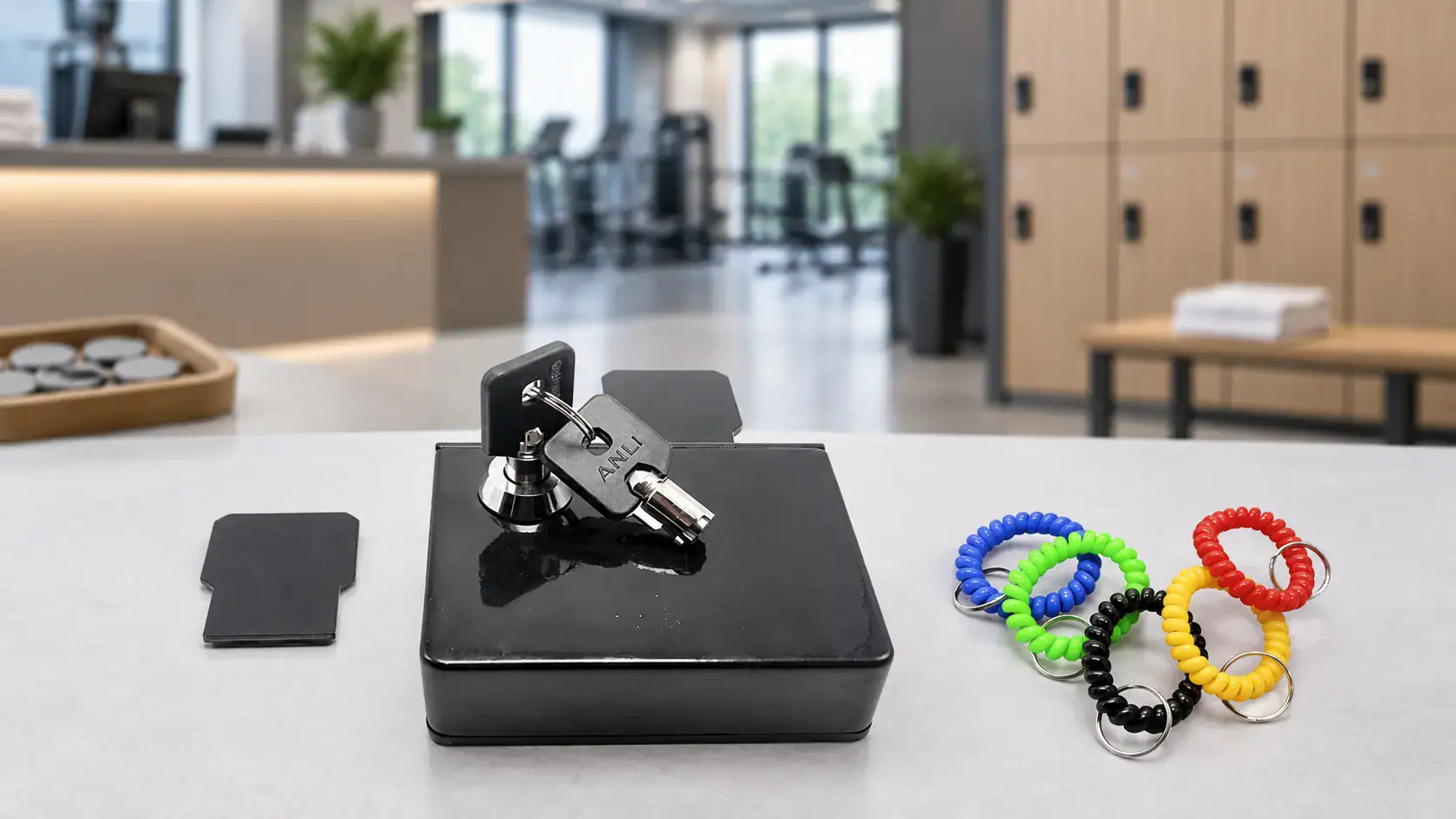
Compare the Whole User Journey
Map how the user obtains the coin or token, when it is inserted, whether a key is retained, whether the input returns or enters a collection box, and how staff handle abandonment or reset.
This exercise often decides the format. A token may be technically reliable but operationally poor in an unmanned transport hub. A coin may be convenient but unsuitable for a factory that wants access limited to employees.
Specify the Coin or Token as an Engineered Part
Provide physical samples from more than one batch where possible. Document diameter, thickness, tolerances, edge profile, material, mass or magnetic response when relevant, and permitted wear. A token project should define artwork, marking, color, plating and ownership of any tooling.
Acceptance is only half the task. Define which near-size objects must be rejected. Validation should include new and worn accepted samples, agreed foreign coins or washers, off-center insertion and recovery after partial entry.
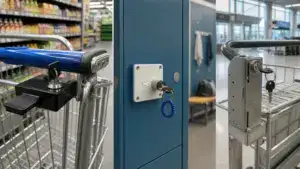
The related guide to coin locks for carts, lockers and trolleys shows how the mating door, chain and handle geometry changes the mechanism requirement.
Revenue, Accounting and Fraud Control
For a retain system, state collection-box capacity, emptying frequency, service-key control, tamper exposure and reconciliation method. A token sold at a counter may simplify price changes, but sales still need control.
Neither tokens nor coins eliminate fraud automatically. Security depends on the acceptance mechanism, the difference between valid and invalid objects, housing access, collection design and staff procedures. Marketing terms such as “anti-fraud” should be tied to named construction details or agreed tests.
Reliability and Maintenance
Dirt, corrosion, burrs, thick plating, damaged inputs and door misalignment can affect both formats. Do not assume a purpose-made token will cure a poorly controlled coin path.
Test the lock in its intended mounting orientation with the final door, latch, chain or cable. Identify the expected contamination, cleaning and environmental risks before preparing the formal validation plan.
OEM and Repeat-Order Requirements
Your RFQ should include the application, user-flow diagram, accepted object, return/retain logic, mounting drawing, handedness, key system, staff override, environment, daily cycles, finish, branding, packaging and annual demand.
Validate the Complete System Before Mass Production
Approve production-intent samples with the final coin or token, door, latch, chain or cable, key system and mounting orientation. Test normal cycles, return or retention, wrong-object rejection, staff override, interrupted insertion, reset and recovery from a jam. Where the application requires it, include agreed contamination, corrosion or cleaning-chemical conditioning.
The validation plan should identify the method, sample quantity, cycle count, load, accepted and rejected inputs, inspection points and pass criteria. Freeze the approved mechanism, coin or token specification and critical dimensions so repeat orders match the validated configuration.
Choose the Right Coin or Token Platform With ANLI
ANLI supports OEM and wholesale coin-lock projects with user-flow review, accepted-input definition, mechanism configuration, keying, branding, sample fitting and production planning. Send your application, operating sequence, coin or token samples, mounting drawing, service requirements, environment and forecast volume through the contact page for a feasibility review and production-intent sample proposal.
Frequently Asked Questions
Can the same lock accept both coins and tokens?
Only if the acceptance mechanism is designed and validated for both. Similar diameter does not guarantee reliable acceptance because thickness, edge profile, material, mass and magnetic response may also affect operation.
Can a custom token reduce misuse?
It can make casual substitution more difficult, but it does not eliminate copying or fraud. Control the token drawing, tooling, approved samples and reorder source, and test the objects the mechanism is expected to reject.
What happens if the local coin changes?
The existing mechanism may need adjustment, replacement parts or a new platform. Keep approved coin samples and drawings, and review compatibility before the old coin leaves circulation or a repeat order is placed.