Anti-snap, anti-drill and anti-pick features address different attacks. Anti-snap construction manages forced fracture of a projecting cylinder, anti-drill components protect critical areas from drilling, and anti-pick design complicates manipulation of the pin or wafer system. Commercial buyers should specify the required performance and evidence for the complete cylinder, not accept these terms as interchangeable marketing claims.
What Each Cylinder Feature Is Intended to Do
| Feature | Attack addressed | Common design approach | Important limitation |
| Anti-snap | Gripping, bending and breaking the cylinder | Controlled sacrificial section plus protected operating core, reinforced body or both | Cylinder projection and door furniture remain critical |
| Anti-drill | Drilling pins, plug, retaining screw area or operating components | Hardened pins, plates, inserts or protected component geometry | Protection must cover the relevant drilling path |
| Anti-pick | Manipulating pins or wafers to create a shear line | Security pins, side elements, complex profiles and tighter control | “Pick-resistant” is not the same as impossible to pick |
These features can be combined, but one does not prove the others. A cylinder with a hardened drill pin may have no special snap construction, and a complex keyway may not resist pulling or forced rotation.
How Anti-Snap Construction Works
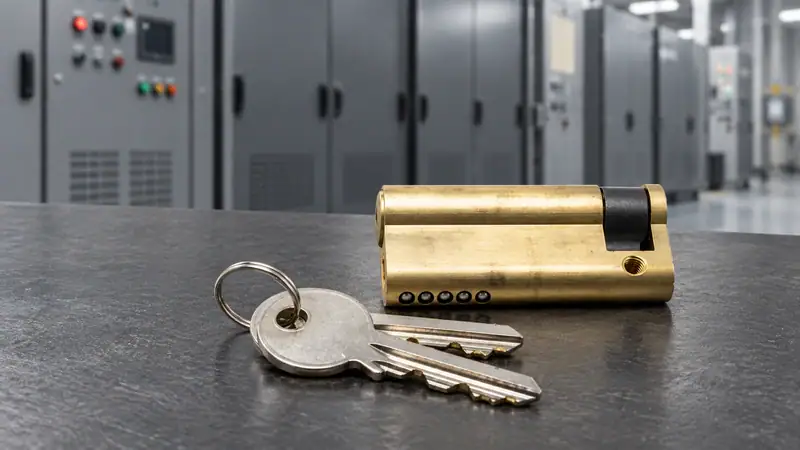
Snap attacks target the cylinder body, particularly when it projects beyond the protective door furniture. Some anti-snap designs use a planned break section so an outer portion can fail while leaving the central operating component protected. Others add stronger bridges, bars or body reinforcement.
Installation matters. A cylinder extending too far beyond the escutcheon gives tools more purchase. Length should match the door, lock case and security furniture. A protective escutcheon can shield the cylinder face and sides, but it must be compatible with the complete door set.
ANLI’s comparison of Euro profile, rim and oval cylinders explains why profile, fixing center, cam or tailpiece and door preparation must be correct before security options are added.
How Anti-Drill Features Work
Drill resistance normally uses hardened parts at selected attack points. These may include pins in the plug and body, a face plate, rotating inserts or protection around retaining and operating components.
The phrase “hardened pin” is incomplete. Ask where it is located, what it protects and whether the production design has been tested. A single insert may not protect every route.
Location, retention and heat-treatment consistency affect performance. For repeat orders, freeze the component specification and require approval for security-sensitive changes.
How Anti-Pick Features Work
Conventional pin-tumbler cylinders open when the correct key positions all pin pairs at the shear line. Picking attempts to reproduce that condition without the authorized key.
Security pins can create false set positions. Side pins, sliders, dimples or interacting elements can increase manipulation complexity. A complex key profile can support key control, but it is not proof of tested pick resistance.
Manufacturing tolerances influence both security and daily operation. Excessive clearance can aid manipulation, while inconsistent parts can cause wear or unreliable key insertion.
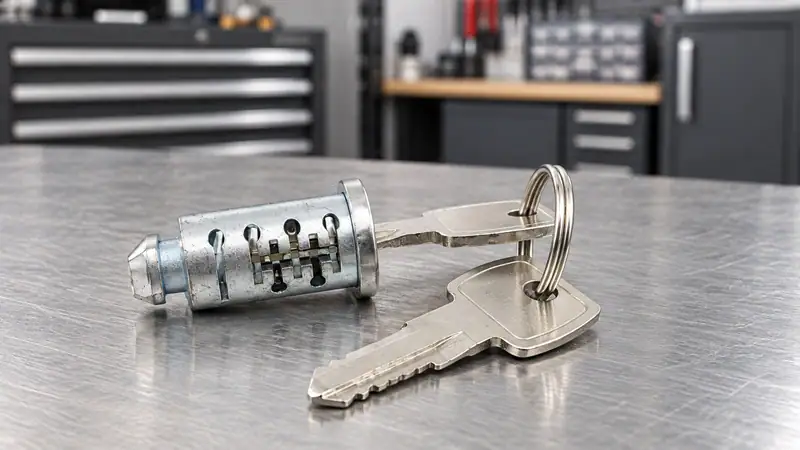
Look Beyond Three Feature Labels
A commercial specification may also need resistance to pulling, twisting, plug extraction or bumping. Key-related security includes code diversity, duplication controls, key strength and master-key capability.
The applicable edition of EN 1303, where used by the target market, classifies cylinders and master-key systems through requirements and performance tests covering areas such as durability, corrosion, key-related security and attack resistance. State the required classification or customer protocol rather than writing only “EN 1303 cylinder.” Standards, editions and regulatory expectations should be confirmed for the destination market.
ANLI’s cylinder-lock range includes different profiles and interfaces for door, furniture and equipment applications. Not every feature is suitable or available in every architecture; confirm the production construction for the quoted model.
The Door Assembly Determines Real Performance
The cylinder works with the lock case, cam or tailpiece, fixing screw, escutcheon, door and frame. Attackers may exploit the weakest interface.
Check:
- Correct inside and outside cylinder length.
- Minimum practical projection beyond protective furniture.
- Escutcheon coverage and fixing method.
- Lock-case and cam compatibility.
- Door material and reinforcement.
- Accessible screws or removable trim.
- Operation after installation without binding.
For glass-adjacent doors or egress routes, thumbturn and double-key choices require additional safety and code review. Security cannot be evaluated separately from lawful escape and accessibility requirements.
What Evidence Should a Buyer Request?
When certification is required, ask for evidence applicable to the exact construction. Check the model, profile, length range, operating configuration, date, issuing body, standard and classification.
If the project uses a customer test, define attack tools, sequence, duration, sample mounting, conditioning and pass criteria. A supplier video may illustrate construction but does not replace an agreed independent classification where the tender requires one.
Production control should verify critical materials, hardened-component presence and position, dimensions, key function and agreed sample-test frequency.
Include the Key System and Commercial Details
Specify keyed-different, keyed-alike or master-key operation, the planned hierarchy, number of keys, marking rules and repeat-order control. Also define finish, logo, packaging, installation hardware, target market, order quantity and forecast life of the program.
Approve production-intent samples in the final door hardware. Test key operation from both sides where applicable, cam movement, clutch or emergency function, and performance after agreed durability and corrosion conditioning.
Turn Security Claims Into a Testable Cylinder Specification
ANLI supports OEM cylinder projects with profile and dimension review, cam or tailpiece configuration, key planning, security-feature evaluation, samples and production control. Send your door and lock-case drawing, cylinder dimensions, target-market standard, required attack performance, key hierarchy, finish and forecast volume through the contact page for a project review.
Frequently Asked Questions
Does anti-snap mean the cylinder cannot break?
No. Some designs intentionally allow an outer section to break while protecting the operating core. Performance depends on construction, installation and the agreed test.
Does an anti-drill pin make a cylinder high security?
Not by itself. Location, coverage, material control, other attack paths, key security and the complete door assembly also matter.
Is any cylinder completely pick-proof?
Avoid absolute claims. Good designs increase manipulation resistance, but buyers should rely on defined construction and test evidence for the required threat level.