Small, reliable, and surprisingly versatile — cam locks are one of the most widely used locking mechanisms in the world, yet most people know very little about them. This guide covers everything: what they are, how they work, the different types, and how to pick, install, and maintain the right one for your needs.
What Are Cam Locks?

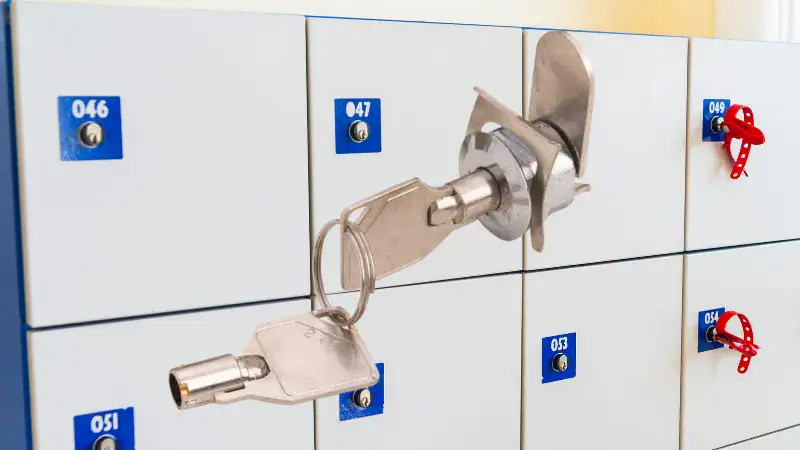
A cam lock is a compact, cylindrical locking mechanism that secures enclosures by rotating a flat metal piece — called a cam — to engage or disengage a locking point. The “cam” itself is the heart of the system: a flat or curved piece of metal attached to the back of the lock body that pivots when the key is turned, catching on a receiver to hold the door or panel shut.
You’ll find cam locks everywhere — on file cabinets, mailboxes, vending machines, electrical panels, furniture, lockers, and industrial enclosures. They are low-profile, affordable, and remarkably effective for their size.
How Do Cam Locks Work?

The operating principle is elegantly simple. You insert the key into the lock face and rotate it either 90° or 180° clockwise. This rotation turns the cam attached to the rear of the lock cylinder. As the cam swings into its locked position, it catches behind the door frame or panel edge — physically preventing the enclosure from opening.
To unlock, you simply reverse the turn. The cam rotates back, clears the catch, and the door or drawer is free to open. No springs to fail, no complex electronics to troubleshoot. The whole mechanism relies on pure rotational geometry, which is a big reason why cam locks are so durable and reliable over time.
Cam Lock Components
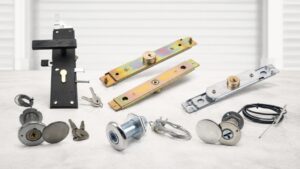
Understanding what’s inside helps you make smarter decisions when buying or replacing one. A standard cam lock has four main parts:
- Lock cylinder — The main body that houses the key mechanism (pin tumbler, wafer tumbler, or disc tumbler)
- Cam — The rotating metal tongue at the rear; comes in different lengths and shapes to suit different panel thicknesses and applications
- Retaining nut — Secures the cylinder to the panel from the inside
- Key — Turns the cylinder; flat keys are the most common, though tubular and T-handle variants exist
The cam shape and length matter more than people realize. A cam that’s too short won’t engage properly; one that’s too long may bind or not fully retract.
Common Types of Cam Locks
There’s no single “standard” cam lock — the right type depends on your security needs, application, and environment. Here are the most common ones:
By Mechanism
- Pin tumbler cam locks — The most recognized design; spring-loaded pins align only with the correct key, offering solid everyday security
- Wafer tumbler cam locks — Simpler and cheaper than pin tumbler; widely used in furniture and low-security applications
- Disc tumbler cam locks — More pick-resistant than wafer types; common in lockers and mid-range security enclosures
By Key/Access Type

- Flat key cam locks — The classic, cost-effective standard; suitable for cabinets, office furniture, and access panels
- T-handle cam locks — Feature an ergonomic T-shaped handle that gives more leverage; ideal for truck toolboxes, industrial enclosures, and generator housings with compression seals
- Electronic cam locks — Replace the physical key with a keypad, RFID card, or Bluetooth; great for high-traffic environments that need audit trails and flexible access control
- Keyless cam locks — Use a combination dial or push-button; convenient where multiple users need access without distributing keys
By Keying Configuration
- Keyed Different (KD) — Each lock has a unique key; the most secure option for personal lockers, cash boxes, and private cabinets
- Keyed Alike (KA) — All locks in a set open with one key; convenient for maintenance panels or vehicle fleets, though less secure
Pros & Cons of Cam Locks
Cam locks offer a strong balance of simplicity and security — but they’re not perfect for every situation. Here are advantages and disadvantages of cam locks.
| Pros | Cons |
|---|---|
| Easy and quick to install | Not suitable for high-security perimeter doors |
| Low cost, even for large deployments | Standard models can be picked or drilled by experienced intruders |
| Compact — fits flush with the panel surface | Keys can be lost or duplicated |
| Wide range of sizes, materials, and finishes | Limited resistance to forceful attack compared to deadbolts |
| Works across residential, commercial, and industrial applications | Cam length must be matched carefully to panel thickness |
| Durable — quality brass or stainless steel models last decades |
How to Choose the Right Cam Lock
With hundreds of options on the market, here’s a practical framework to narrow it down:
How to Install a Cam Lock
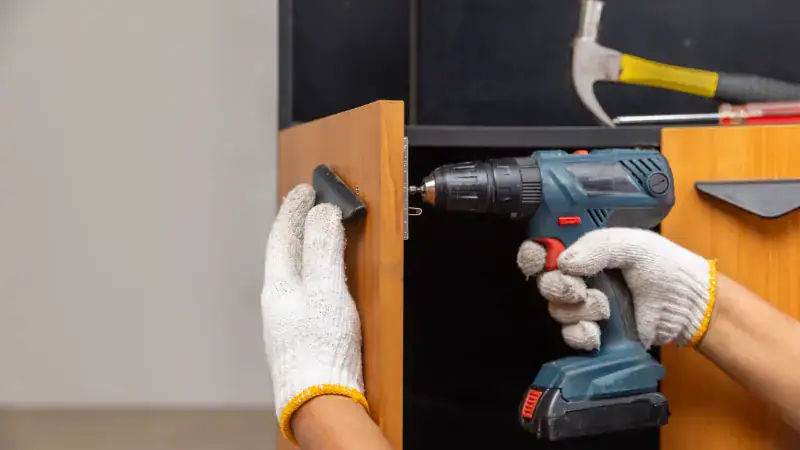
Installation is straightforward and requires minimal tools: a drill, the correct hole saw or step bit, a screwdriver, and a measuring tape.
- Mark the position — Decide where the lock will sit. Centre it on the panel edge, away from corners to avoid splitting.
- Drill the hole — Use the correct diameter bit (typically 19mm or 22mm). Drill cleanly and deburr the edges.
- Insert the lock cylinder — Push the cylinder through the hole from the front face of the panel.
- Attach the cam — Slide the cam onto the rear post of the cylinder in the correct orientation for your application (horizontal or vertical catch).
- Secure with the retaining nut — Thread the nut onto the cylinder from the back and tighten firmly — but don’t overtorque, as this can crack thinner panels.
- Test before closing up — Insert the key and rotate fully in both directions. Confirm the cam engages and retracts smoothly and that the door latches securely.
If you’re replacing an existing lock, remove the retaining nut, slide out the old cylinder, swap in the new one, reattach the cam, and test.
How to Maintain Cam Locks
A quality cam lock can last for decades — if you give it a little attention.
- Lubricate regularly — Apply a small amount of graphite powder or PTFE-based lubricant into the keyway every 12 months. Avoid oil-based lubricants as they attract dust and can gum up the pins
- Keep it dry — Don’t wipe the lock body with wet cloths, and for outdoor installations, ensure the housing provides some shelter from direct water ingress
- Inspect for wear — Periodically check the cam, retaining nut, and cylinder for signs of wear, corrosion, or wobble. Replace worn parts promptly
- Handle with care — When closing doors, use the handle — not the panel — to avoid putting lateral stress on the lock cylinder
- Re-key or replace after security events — If a key is lost or you suspect unauthorized duplication, replace the cylinder rather than hoping for the best
For electronic cam locks, check battery levels and clean the keypad or reader contact points periodically.
FAQs
Who invented the cam lock?
The cam lock is credited to Volcker Galk of Canada, who invented it in 1985. Separately, the related camlock coupling — used in fluid transfer — was patented in the 1950s by American engineer John R. “Jack” Fitzgerald, whose design used rotating cams to create quick, secure connections.
Can cam locks be rekeyed?
Most standard cam locks cannot be rekeyed in the field — the entire cylinder needs to be replaced. Some higher-end models do support rekeying kits. If rekeying flexibility matters to you, look for this feature before purchasing.
What’s the difference between a cam lock and a deadbolt?
A cam lock uses a rotating cam to catch; a deadbolt projects a solid bolt directly into a strike plate. Deadbolts offer higher resistance to forced entry but are bulkier and more complex to fit into thin panels or enclosures.