
A jammed door lock is a lock that won’t turn or open properly, even when you use the right key or door handle. Sometimes the key goes in but doesn’t turn. Other times it turns halfway and then gets stuck.
Locks can jam for many reasons. In this guide, we’ll go through simple steps you can try from the outside to free a jammed lock safely. We’ll also talk about what not to do, and when it’s smarter to stop and call a professional.
Why Is Your Door Lock Jammed?
Understanding why the lock is jammed helps you pick the best fix.
- Dirt, rust or wear and tear inside the lock
Over time, dust, tiny particles, and rust can build up inside the keyhole. This makes the lock mechanism stiff and hard to turn. - Misaligned door or latch
If the door frame has shifted or the hinges are loose, the latch might not line up with the hole in the frame. The lock itself may be fine, but the door is putting pressure on it. - Bent or worn-out key
A key that’s slightly bent or very worn may not match the lock’s inner pins well anymore, making it hard to turn. - Weather and swelling
Wooden doors can swell in humid or rainy weather. In cold places, locks can even freeze. This can squeeze the latch and make turning the key more difficult. - Something stuck inside the lock
A broken piece of key, a bit of metal, or even a child’s toy can get stuck in the keyhole and block movement.
Once you have an idea of what might be wrong, you can choose the method that makes the most sense.
Simple Non‑Damaging Methods
These are gentle techniques you should try first to fix a stuck door. They usually don’t require any special tools and are unlikely to damage the lock.
Jiggle and Gentle Pressure
This sounds basic, but it actually works often.
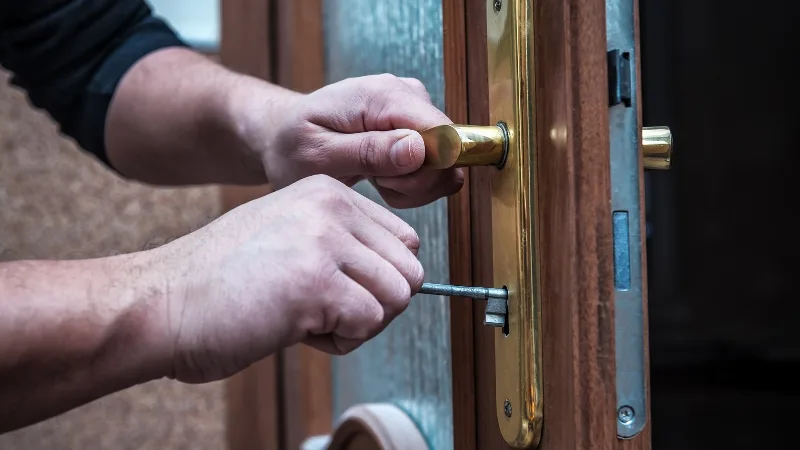
- Insert the key all the way into the lock.
- Put light pressure in the direction you normally turn to unlock.
- While keeping that gentle turning pressure, jiggle the key slightly up and down or side to side.
- At the same time, try:
- Pushing the door toward the frame
- Pulling the door gently toward you
The idea is to help the inner parts of the lock line up while the door pressure is changing. If it doesn’t loosen after a few tries, don’t keep forcing it—move on to the next method.
Lubricate the Lock
If the lock feels stiff, dry, or rusty, lubrication can help a lot.
What to use:
- Best: graphite powder (made for locks)
- Good: silicone spray
- Acceptable in a pinch: a tiny bit of light machine oil
Avoid: thick oils like cooking oil or grease. They attract dust and can make the lock worse over time.
Steps:
- Spray or puff a small amount of lubricant directly into the keyhole.
- Insert the key in and out several times to spread the lubricant inside.
- Try turning the key gently again, using the wiggle and light pressure technique.
If the movement gets easier, repeat this process once or twice more. If it stays completely stuck, the problem might be misalignment or an obstruction, not just friction.
Check Door Alignment
Sometimes the lock is fine, but the door is putting pressure on it.
Try these positions while turning the key gently:
- Lift the doorknob or handle slightly upward
- Push the door in toward the frame
- Pull the door slightly toward you
- Push or pull near the top or bottom of the door
If the key suddenly turns when you hold the door in a certain position, that’s a sign the door or frame is misaligned. You might need to adjust hinges or the strike plate later, but this trick can still help you get inside for now.
Simple Tools You Can Try
If the basic methods don’t work, you can try a few simple tools. These methods are still fairly gentle if done carefully.
Using a Plastic Card (Latch Issues, Not Deadbolts)
This method works only on simple spring-latch locks, the kind used on many interior doors. It does not work on deadbolts.
You’ll need:
- A flexible plastic card you don’t mind damaging (old gift card, store card, etc.)
Steps:
- Slide the card between the door and the frame, just above or below the latch.
- Wiggle it until the edge of the card touches the latch (the metal tongue that sticks out from the door).
- Bend the card toward the door to push the latch back into the door.
- At the same time, push or pull the door.
If you feel the latch move, keep pressure until the door opens. Be patient; it can take a few tries.
Using a Screwdriver (If There Are Visible Screws)
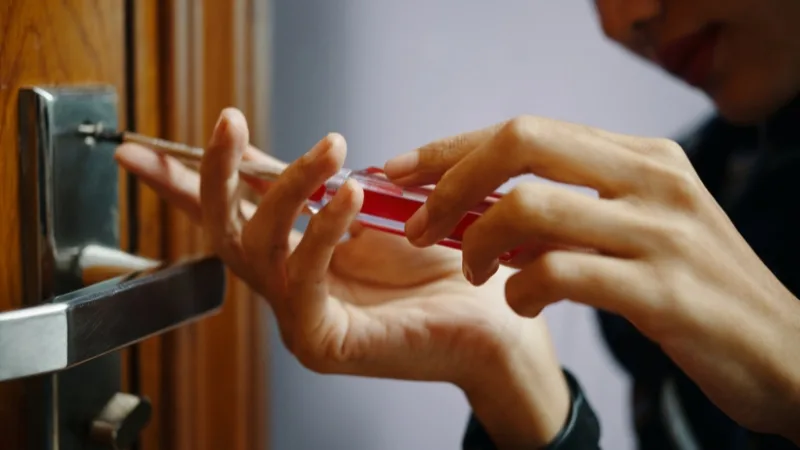
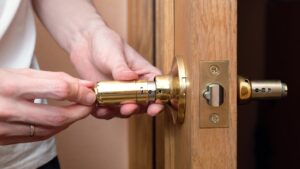
On some doors, especially older ones, you can see the screws holding the handle or lock from the outside.
You’ll need:
- A screwdriver that fits the screws (usually Phillips or flat‑head)
Steps:
- Carefully remove all visible screws around the handle or lock plate.
- Gently pull the handle or plate away from the door.
- Look for the metal bar or mechanism that turns the latch.
- Use the screwdriver or another flat tool to turn this mechanism manually.
Once the door is open, you can decide whether to repair, clean, or replace the lock.
When the Key Is Stuck or Broken
Sometimes the key itself becomes part of the problem.
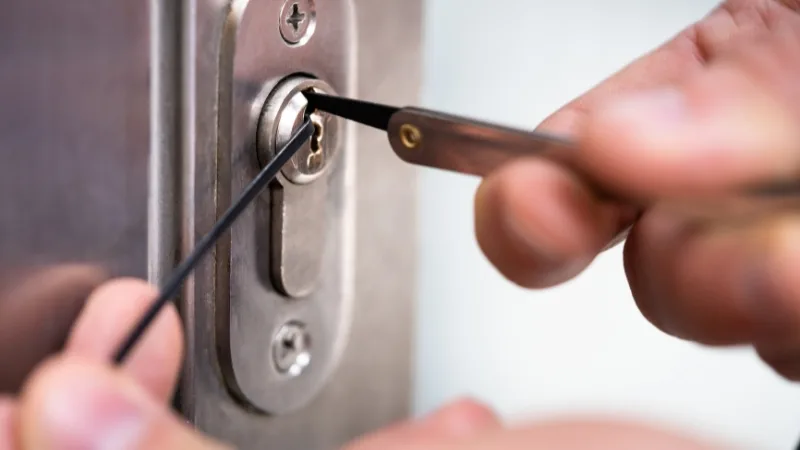
Using a Hairpin or Paperclip (Key Stuck but Not Broken)
If the key goes in but won’t turn, the internal pins inside the lock cylinder might be stuck or out of alignment. This method gently manipulates them.
You’ll need:
-
A hairpin or a large paperclip
Steps:
- Straighten the hairpin or paperclip, leaving a very small hook at one end.
- Insert your key fully into the lock and apply light, constant pressure in the unlock direction. Hold it there.
- Insert the hooked end of the tool into the keyhole, underneath the key.
- Gently rake or probe the pins inside the lock with the hook. You’re trying to nudge them into the correct position.
- If you feel a slight click or movement and the key turns, you’ve succeeded.
How it works: This mimics basic lock picking and can help free pins jammed by dirt or slight wear.
Using a Fine Tweezer (Broken Key Inside the Lock)
A broken key in the lock is more serious, but you may still be able to fix it yourself.
You can try:
- A fine tweezer or a broken-key extractor tool (if you have one in a kit)
Steps:
- If part of the key is still sticking out, try to grip it with tweezers.
- Pull straight out, gently, without twisting.
- If the broken piece is deep inside and you can’t grab it, do not push it further in.
If you can’t reach it easily, it’s better to stop here. Forcing tools into the lock can damage the inside and make repair more expensive.
What Not to Do With a Jammed Door Lock
Trying to “muscle” your way through a jammed lock usually makes things worse. Avoid these common mistakes:
- Do not kick or slam the door
This can crack the door frame, bend the hinges, or even break the lock completely. - Do not force the key with extreme pressure
If it doesn’t turn with normal hand strength, something is wrong. Forcing it often snaps the key. - Do not pour random liquids into the lock
Cooking oil, WD‑40 in large amounts, or other household liquids may give short-term relief but can attract dust and gum up the lock later. - Do not use sharp objects that can break inside
Things like needles, tiny nails, or pieces of wire can snap off and make the jam worse.
Being patient and gentle is usually faster in the long run than trying to overpower the lock.
When to Call a Professional
Sometimes the smartest and cheapest move is to stop and call a professional locksmith.
Consider calling a professional if:
- You’ve tried the basic methods and nothing works
- A key is broken deep inside the lock
- The lock is high-security or part of an expensive door
- You’re worried you might damage the door, frame, or lock
A locksmith has special tools and experience to fix the problem quickly. The cost is often less than repairing a broken door or replacing a whole lock set that was damaged by trial-and-error attempts.
How to Prevent Jammed Locks in the Future
Once you’ve solved the problem, a few simple habits can reduce the chances of it happening again.
- Lubricate locks occasionally
Every few months, add a small amount of proper lock lubricant or graphite powder. - Avoid using damaged keys
Replace keys that are bent, cracked, or very worn. Worn keys not only jam but can also break inside the lock. - Fix door alignment issues
If your door scrapes the floor or frame, or you have to push hard to close it, consider:- Tightening or adjusting hinges
- Adjusting the strike plate
- Getting help from a handyman or carpenter
- Upgrade very old or rusty locks
If your lock jams a lot, it might be cheaper and safer in the long term to replace it with a new, better-quality one.
FAQs
Can I fix a jammed lock myself?
Yes, in many cases you can. Simple tricks like gently jiggling the key or using a little lubricant often help. If nothing works or you feel you might break something, stop and call a locksmith.
What can I use to lubricate a stiff lock?
Graphite powder or a lock lubricant is best. A silicone spray can also work. Avoid thick oils like cooking oil or grease, because they attract dust and can make the lock worse later.
How do I open a door with a plastic card?
This only works on simple latch locks, not deadbolts. Slide a flexible plastic card between the door and frame near the latch, then bend it toward the latch to push it back while you push or pull the door.