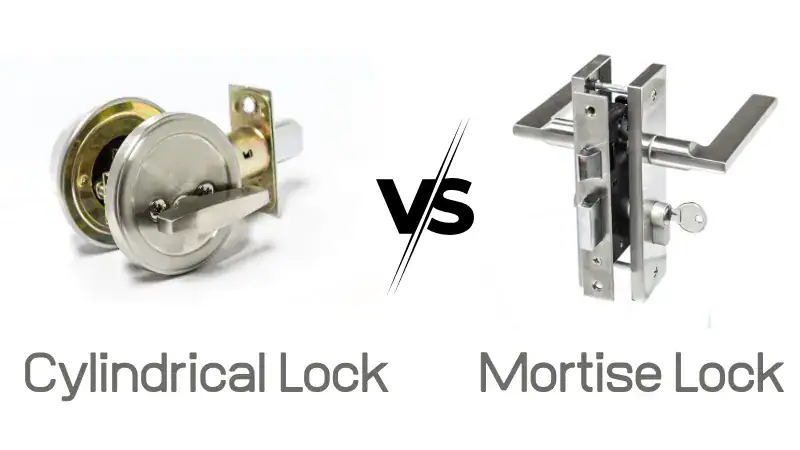
If you are upgrading your home security or outfitting a new commercial building, you will likely face a common dilemma: mortise lock vs cylinder lock. This mortise lock confusion is completely normal! These two types of locks are the most common choices on the market, but they function very differently. We have put together this comparison to help you understand the main differences and make the right choice for your property.
What Is a Mortise Lock?
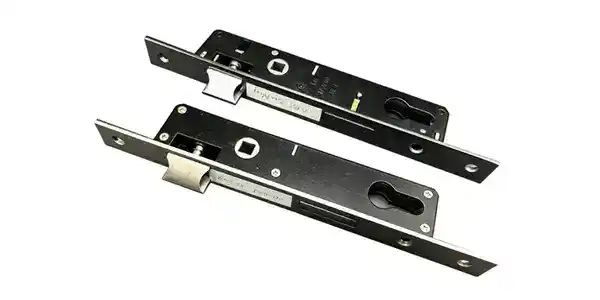
A mortise lock is a heavy-duty locking system where the lock mechanism is contained entirely within a rectangular metal box. To install it, a carpenter must cut a deep, rectangular pocket—known as a “mortise”—directly into the edge of the door. The large, boxy lock body slides entirely into this pocket.
You will often spot mortise locks on commercial buildings, high-end homes, and historic properties. They contain complex internal mechanics made from solid metal. Because the lock sits deep inside the door frame, it provides massive strength against forced entry.
How Does It Work? (simple explanation) It uses a hidden metal box filled with heavy-duty levers and springs inside the door. Turning the key moves these internal parts to smoothly slide a thick, secure deadbolt into the door frame.
What Is a Cylindrical Lock?
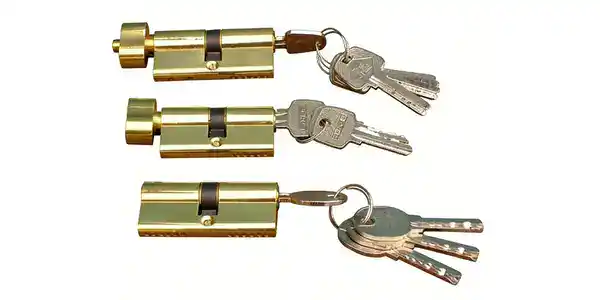
A cylindrical lock (often referred to as a cylinder lock or tubular lock) is the standard lock you see on most residential doors today. It does not require a deep pocket carved into the wood. Instead, it only needs two circular holes bored into the door: one through the face and one through the edge.
The lock mechanism passes horizontally through the door to connect the knobs or levers on both sides. These locks are incredibly popular because they are fast to install and very easy to replace. While they might not match the sheer strength of a mortise lock, a high-quality cylindrical lock (especially a Grade 2 or Grade 1 model) provides excellent security for everyday use.
How Does It Work? (simple explanation) It operates using a central metal rod that passes straight through the door to connect the inside and outside handles. When you turn the knob, this rod spins to pull back the latch, and locking the door simply blocks the rod from turning.
Key Differences: Mortise vs. Cylindrical Locks
When looking at mortise and cylindrical locks, you need to consider four main dimensions. Here is how they stack up against each other.
Installation & Compatibility
Installation is one of the biggest differences between mortise and cylindrical lock types. A mortise lock requires a skilled carpenter to cut a mortise pocket into the edge of the door. This is a complex prep job. If you have a new door without existing holes, you have a blank canvas, but it takes time.
On the flip side, a cylindrical lock is easy to install. It fits standard bore holes, making it perfect for a quick retrofit on an older door. If your door is already pre-drilled, switching to a new cylindrical lock is a breeze.
Security & Durability
When it comes to high security, the mortise lock remains the champion. Because the lock body is recessed within the door itself, it is incredibly resistant to forced entry. The locks come with longer and thicker deadbolts. Many are rated as Grade 1, meaning they are designed for high-traffic and heavy-duty commercial environments.
Cylindrical locks provide great security for standard residential use, but they are more vulnerable to brute force. Since the chassis sits inside a relatively small hole, extreme force can sometimes compromise it. However, adding a heavy-duty separate deadbolt greatly improves their resistance.
Aesthetics & Feel
Mortise locks generally offer a very premium, solid feel. The hardware often includes a large, decorative escutcheon plate that ties the handle, key cylinder, and thumbturn together beautifully. They look fantastic on grand entry doors and high-end vintage homes.
Cylindrical locks have a more minimalist and modern look. Because the locks have a single function per bore hole, you have the flexibility to mix and match different deadbolts and handles. They blend easily into almost any light commercial or residential decor.
Cost & Maintenance
There is a significant price gap when you compare mortise vs cylindrical hardware. Mortise locks are more expensive upfront due to their heavy metal assembly and complex internal parts. You also have to factor in the higher labor cost to cut the pocket. However, their durability means they rarely need replacing.
Cylindrical locks offer much better affordability. The locks themselves boast a lower cost, and because they are so common, they are much easier to replace if a part breaks. If you are on a budget, a cylinder lock is usually the smartest financial move.
Quick Comparison Table
To simplify the mortise vs cylindrical debate, we have summarized the main advantages of each lock type. Use this quick comparison to help you decide.
|
Feature
|
Mortise Lock
|
Cylinder Lock
|
|---|---|---|
|
Security
|
Excellent
|
Good
|
|
Installation
|
Complex, irreversible
|
Easy, reversible
|
|
Cost
|
High
|
Low
|
|
Aesthetics
|
Traditional, premium
|
Modern, minimalist
|
|
Durability
|
Excellent (decades)
|
Good (10-20 years)
|
|
Maintenance
|
Professional required
|
DIY-friendly
|
Making the Choice: Which Lock Is Best for Your Door?
Now that you know the main differences, how do you actually choose the right one?
It comes down to your budget, your door type, and your security needs. If you are securing the main entrance of your home or business and have a larger budget, a mortise lock is the best choice. It gives you peace of mind, an elegant look, and a lock that will probably outlast the door itself.
If you are updating the interior doors of your home, like bedrooms and bathrooms, a cylindrical lock is the perfect fit. It makes no sense to spend large amounts of money on heavy-duty security for a closet door. Cylindrical locks are also the best choice if you want to quickly swap out your door hardware by yourself on a Saturday afternoon.
FAQs
Can I replace a cylindrical lock with a mortise lock?
Yes, but it is not easy. You will need a professional to fill the existing bore holes and then cut a new rectangular pocket in the door edge.
Are tubular locks the same as cylindrical locks?
They are very similar in how they install (using round drilled holes in the face of the door and edge). However, a tubular lock has a slightly different internal latch mechanism compared to a traditional cylindrical lock. Both are easy to install and primarily meant for residential use.
What does “Grade 1” mean for door locks?
Grade 1 is the highest security rating given by builders’ hardware manufacturers. A Grade 1 lock can withstand massive amounts of force and hundreds of thousands of cycles. Many mortise locks easily meet Grade 1 standards, making them perfect for heavy-duty commercial properties.