Think of a door handle not as a single object, but as a system. It’s a team of parts, some you see and touch, and others hidden inside the door, working together to achieve one goal: letting you in or out, securely. We can break this team down into two squads: the Visible Crew and the Internal Mechanism.
Why Knowing Parts of a Door Lock Matters
This isn’t just trivia! This knowledge is practical:
- Informed Buying: You can confidently choose replacement handles, knowing you need to match the backset (the distance from the edge of the door to the center of the handle hole) and the latch type.
- Easy Troubleshooting: Is the lever loose? Tighten the set screw. Does the latch not catch? Check the alignment of the strike plate. Is the key sticking? The cylinder might need lubrication.
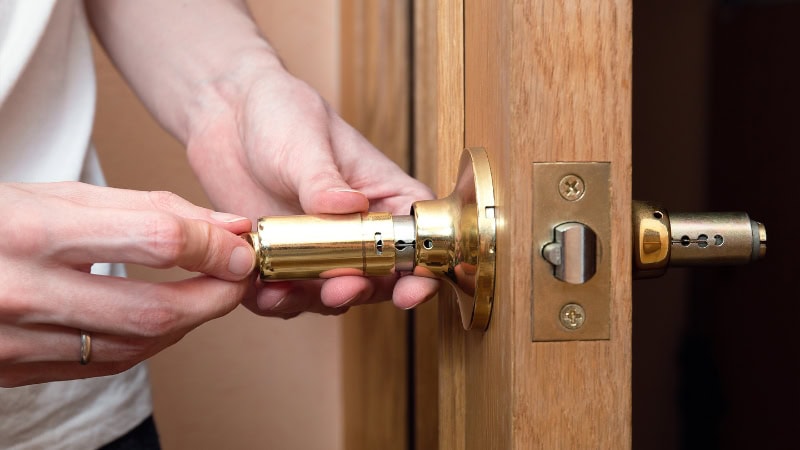
- Simple DIY Repairs: Replacing a worn-out handle becomes a 15-minute task instead of a call to a handyman. You’ll know you need to remove the handles by loosening the set screws, pulling out the spindle, and swapping the old latch assembly for a new one.
Door Handle Parts Names: Meet the Visible Crew
These are the door handle components you interact with every day.
1. Knobs or Levers
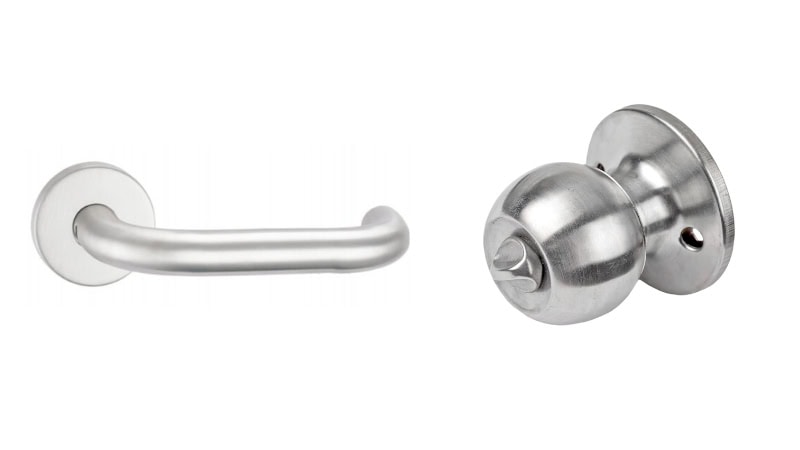
These are the parts you actually grab.
- Door Knob: The classic round ball. You wrap your hand around it, turn, and push or pull.
- Door Lever: A flat or curved handle you simply press down with your hand, wrist, or even your elbow (handy when your arms are full of groceries!). Levers are often considered more accessible.
Fun Fact: The choice between a knob and a lever isn’t just about style. Building codes in many places now require levers on public and commercial doors for accessibility, and that trend is popular in homes, too.
2. Rosettes or Backplates
This is the decorative plate that sits flat against the door, right where the handle comes out. Its main job is to look good and cover up the big hole drilled in the door for the mechanism.
- Rosette: Typically a round, disc-like plate. Common on simpler, modern designs.
- Backplate: Often a larger, rectangular, or elongated plate. It makes more of a decorative statement and is common on traditional or lever-style handles.
If your handle has a keyhole, this plate will have a special cutout for it.
3. Escutcheon
Let’s clear up a common confusion! Escutcheon is just another term for a decorative cover plate. It’s often used specifically for the plate surrounding a keyhole. So, you might have a rosette for the handle and a separate, smaller escutcheon for the keyhole, or one large backplate that covers both.
4. Thumbturn or Privacy Button
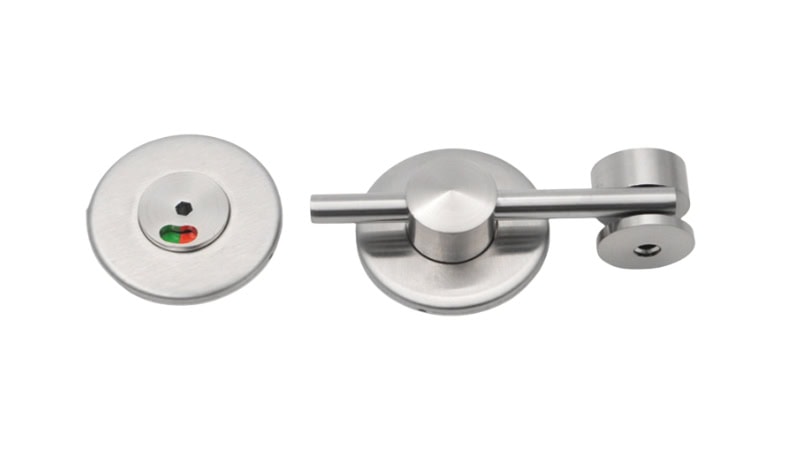
Found on bedroom or bathroom doors, this is the small knob, turn, or push-button on the inside handle. A quick twist or push locks the door by preventing the outside lever from moving. It’s usually unlocked by turning it back from the inside or, in an emergency, with a small tool (like a pin) from the outside.
5. Keyhole & Key Cylinder
For exterior doors or office doors, security is key.
- Keyhole: The literal hole where you insert the key.
- Key Cylinder: This is the entire metal housing surrounding the keyhole. Inside are tiny pins that your key lifts to the perfect height, allowing the cylinder to turn and retract the latch. When you re-key a lock, you’re changing the pins inside this cylinder.
Door Handle Parts Names: The Internal Mechanism
Now, let’s look inside the door. This is where the magic happens.
6. The Spindle
This is the most important connecting part you never see. The spindle is a square or otherwise shaped metal bar that connects the inside and outside knobs/levers through the door. When you turn the handle on one side, you’re actually turning this spindle. It’s the messenger that carries your “open this door!” command to the latch.
7. The Latch (or Latchbolt)
This is the spring-loaded metal tongue that sticks out from the edge of your door. Its job is to “catch” in the door frame to keep the door closed. When you turn the handle and the spindle rotates, it activates a mechanism that pulls this latch back into the door, allowing it to swing open. When you release the handle, a spring pushes the latch back out.
Pro Tip: Latches can be different shapes! A round corner latch is common for simple passage doors. A roller latch has a little wheel for smoother operation on closets. For locking doors, a deadlatch is used, which has a security feature to prevent it from being pushed back with a credit card.
8. The Strike Plate
Mounted on the door frame, this metal plate is the latch’s partner. It has a hole (the “strike”) that the latchbolt snaps into when you close the door. The curved “lips” of the strike plate help guide the angled latch smoothly into the hole. It also reinforces the frame, preventing the door from damaging the wood over time.
9. The Latch Assembly (or Latch Body)
This is the metal casing that houses the latchbolt and its springs. It’s installed inside the edge of the door. The spindle goes through this assembly to interact with the latch mechanism.
10. Set Screws
These are the tiny, often hidden screws that hold everything together. The most crucial ones are usually found on the collar of the knob or underneath the lever. When tightened, they bite into the spindle, locking the visible handle firmly onto it so they turn as one unit.
Related Door Hardware: Hinges
For a complete picture of door hardware parts, we must mention door hinges. While not part of the handle, hinges are essential. They are the swinging mechanism attached to the door and the frame, allowing it to pivot. The door thickness can affect the hinge size and strength needed.
How It All Works Together: A 5-Second Drama
Let’s play out what happens when you open a door:
- ACT I: You press down the lever.
- ACT II: The lever turns the spindle that runs through it.
- ACT III: The turning spindle rotates a mechanism inside the latch assembly.
- ACT IV: This mechanism retracts the latchbolt from the strike plate in the frame.
- FINALE: With the latch withdrawn, you push the door open. When you let go, springs in the latch assembly push the latchbolt back out, ready to secure the door next time you close it.
On a privacy door, turning the thumbturn slides a small metal bar into the path of the spindle, blocking it from turning on the other side. On a keyed door, turning the key aligns the pins in the cylinder, allowing it to turn and perform the same action.
FAQs
What’s the difference between a door knob and a door lever?
A knob is round and you turn it with your whole hand. A lever is a flat handle you push down. Levers are easier for kids, seniors, or if your hands are full.
Why won’t my door latch stay closed?
The latch might not be aligning with the hole in the strike plate. Check if the strike plate on the door frame is loose or if the door has sagged. Sometimes, tightening the hinges fixes it.
My door knob is loose and spins. How do I fix it?
This usually means the set screw is loose. Look for a tiny hole on the shank (neck) of the knob or underneath the lever. Insert an Allen wrench or small screwdriver and tighten it.
Why does my key get stuck in the lock?
The key cylinder might be dirty or dry. Try spraying a little graphite powder or dry lubricant made for locks into the keyhole. Don’t use WD-40, as it can attract gunk over time.